

This article is in part inspired by my experience at Network School, which you can read about here, or apply to visit in person here. Also feel free to message me here or email me at [firstname]@ns.com if you have any questions.
Singapore is not boring. Its marvelous architecture blends East Asian pleasantness with Western conceptual design. It is one of the few cities where you can spend ten times the money for ten times better food. Americans who have never been to Paris will on occasion give a false anecdote about a pristine, courteous and romantic city. Singapore is that city in real life.

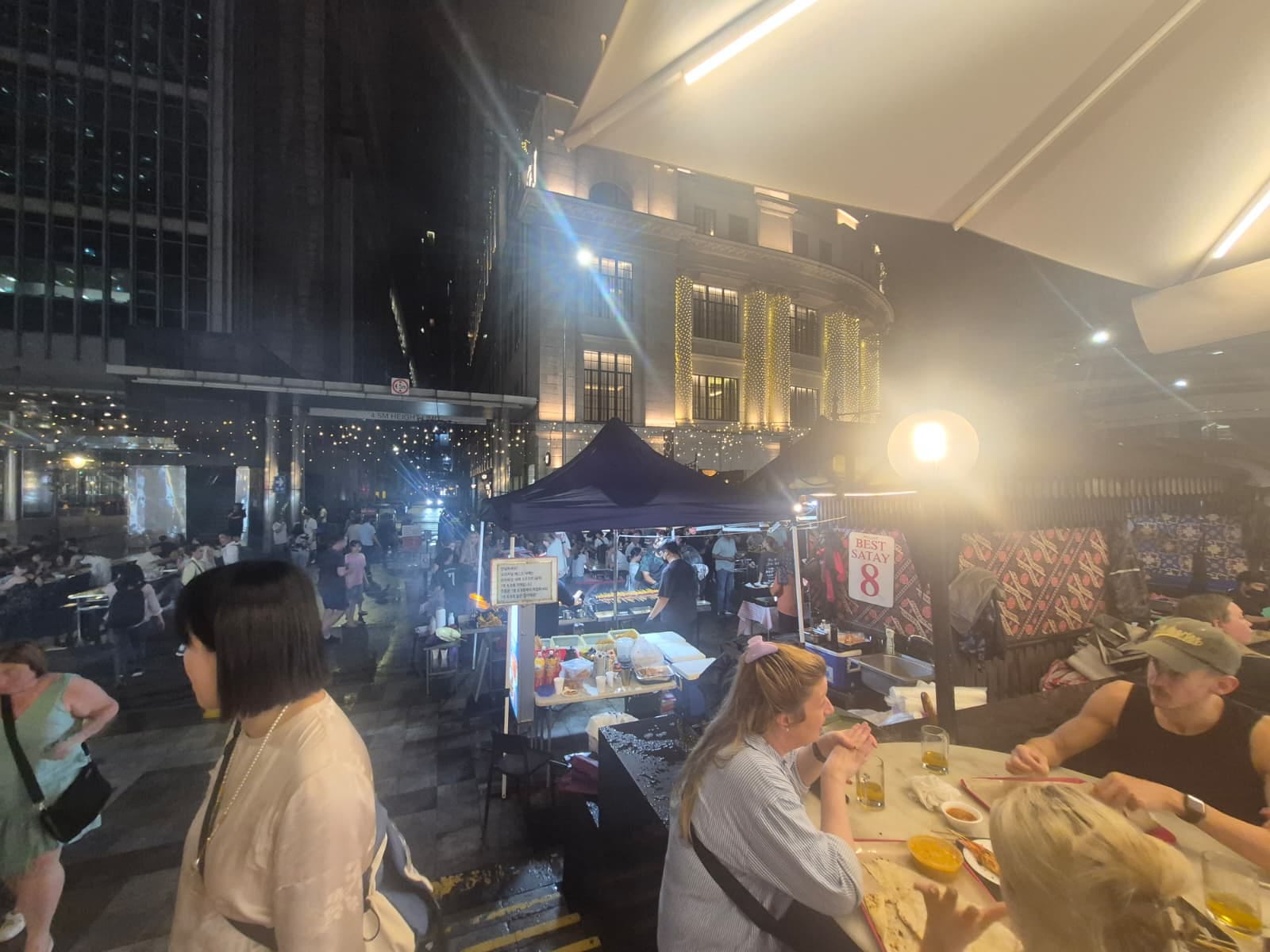

Avid readers of my travelogues will wonder why I’m always positive about the places I travel to. It’s because the negative reviews never get published.1 So here’s a comparison to know that the places I endorse are worth going to.
Europe sucks. I’ve literally never had a trip to Europe that I’ve found worthwhile, even when the surrounding conferences or events are good. Now, let me tell you a secret. I have an incantation that out of every phrase in the English language, will maximize the number of people behaving as tribal as the most woke leftists and the most schizophrenic groypers.
European food is inferior to American food.
Not only that, most European dishes worth serving internationally are better made in America. It’s unbelievable how many otherwise intelligent people who react to these simple words with such extreme tribal impulse to render logic and self-reflection impossible. American food being better should clearly be a possibility worth considering. America is better than Europe in almost every way: software, energy, biology, finance, … the list is literally endless. The American school of market optimization has revolutionized everything in history, and food is no exception.
“They might be failures, but at least they have great food.”
The feeling Americans have about European food is the forlorn pity you have for a senile relative. It’s like when your family agrees to let grandpa win family bowling night. But it’s part of a romantic vision about the origins of quality that is not just false, but the opposite of the truth.
I promise this is central to what makes Singapore a fantastic city.
The Unhidden Secret
Tyler Cowen is right that Singapore doesn’t show up in headlines or policy discussions as often. But does anyone?
One of Trump’s greatest qualities is that you can never predict how his sentences end. He ends on different topics, demands, and punchlines. In this way, Trump is the most American American. In 2026, the headlines are about wars, bankruptcies, or coups.
When’s the last time anyone cared about France or Australia, let alone Laos or Kenya? There’s only two ways for countries to show up in headlines: be in a trade war with America, or be in an actual war with America. But that doesn’t make Singapore boring.
The premise of Atlas Shrugged is that for a place as marvelous as Singapore to attract the best in the world, it needs to stay secret. A shadowy man named John Galt went around taking people, seemingly kidnapping them in the eyes of the outside world, swearing them to secrecy. The premise of real life is that Singapore can just exist, and most people won’t care because they’re too invested in what country America will blow up next.
The Origins of Quality
In all late Soviet Republics, quality collapses. No one puts effort into what they do, from waitresses to ironworkers. Products fail, workers show up late, schedules are delayed, and laws are enforced arbitrarily. Reliability goes to zero. Now, the same is happening to the West.
Many people believe in a folk theory of quality; that is, quality just exists, and commercialization degrades it. This belief is the opposite of the truth. While natural variations in talent certainly exist, all ‘high quality’ products by modern standards are made with industrial systems assembling the most competent human talent, machinery, and resources from across the world. Quality is not merely born from realm or volk. Quality is intentionally made.
Quality comes from the American way of life, not the European way of life.
Service in Singapore is both exceptionally gracious and competent. Meals are served on time, questions are answered knowledgably and politely, and staff are exceptionally patient. European service is the socialist second world, American service is first world, and Singaporean service is zeroth world. And all it takes is a trade to GDP ratio of 320%.2 But that’s exactly what makes it an instructive path forward for the tech economy.
When Lee Kuan Yew founded Singapore, he personally ensured a “golden path” from Changi airport to the city center. Under his leadership, Singapore became the country most thoroughly integrated with global capital, not just because of surface level beneficial regulations, but a deep understanding of the quality of business.
All of Singapore echoes this aspiration. Its buildings have cohesion and intent. It may have the best average food quality of any city in the world.3 And the way the city opens up ahead of you puts American and even Chinese cities to shame.
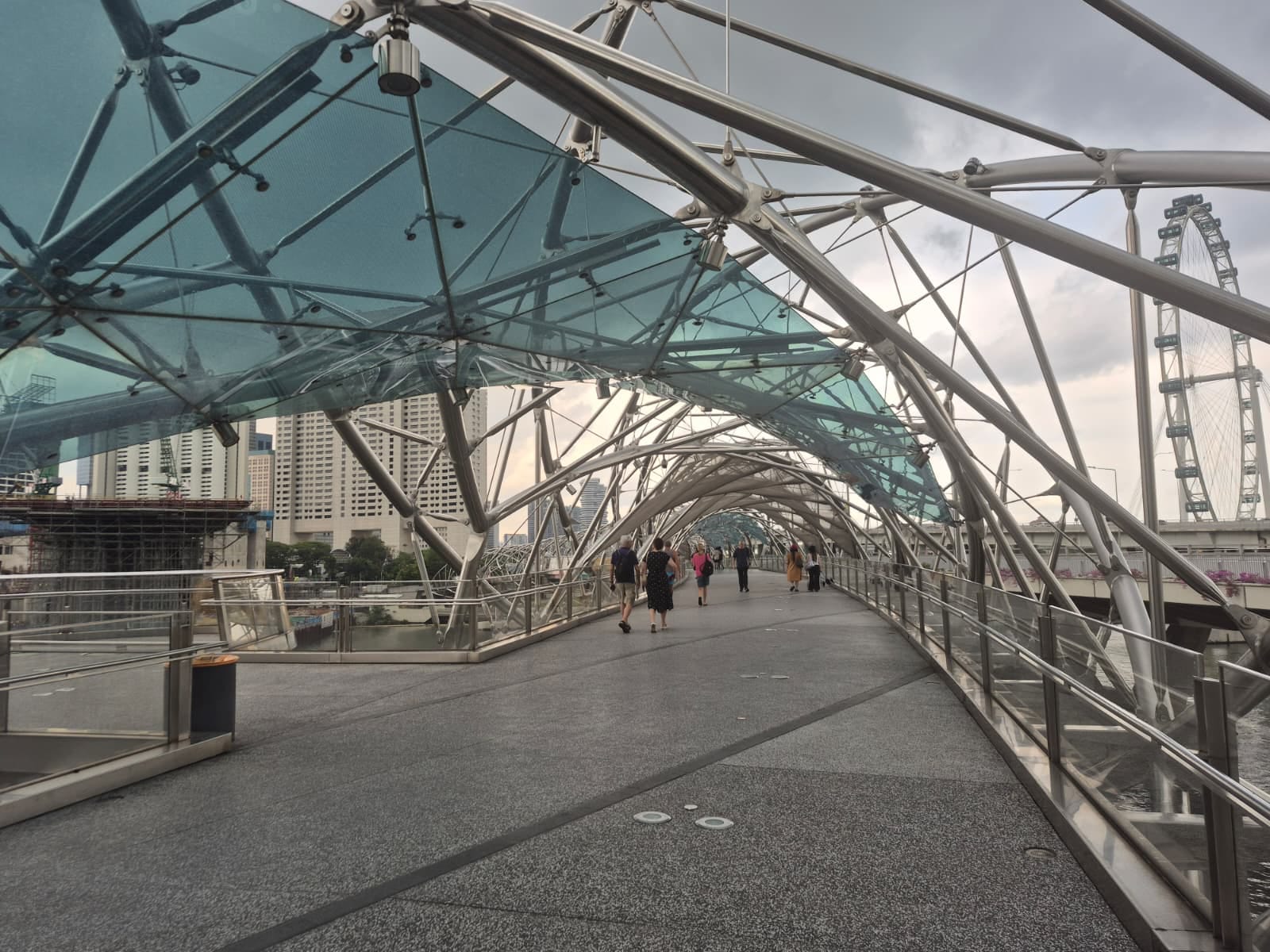
Singapore is fascinating because it shows you how America could be more American.
Singaporea reflects an appreciation of competence. It’s a technocracy with the highest-paid government employees in the world. Rather than resenting top tech companies, the government appreciates them. Like most of Asia, they look forward to new technologies like AI. Singapore, despite already having a high standard of living, remains part of the ascending world.
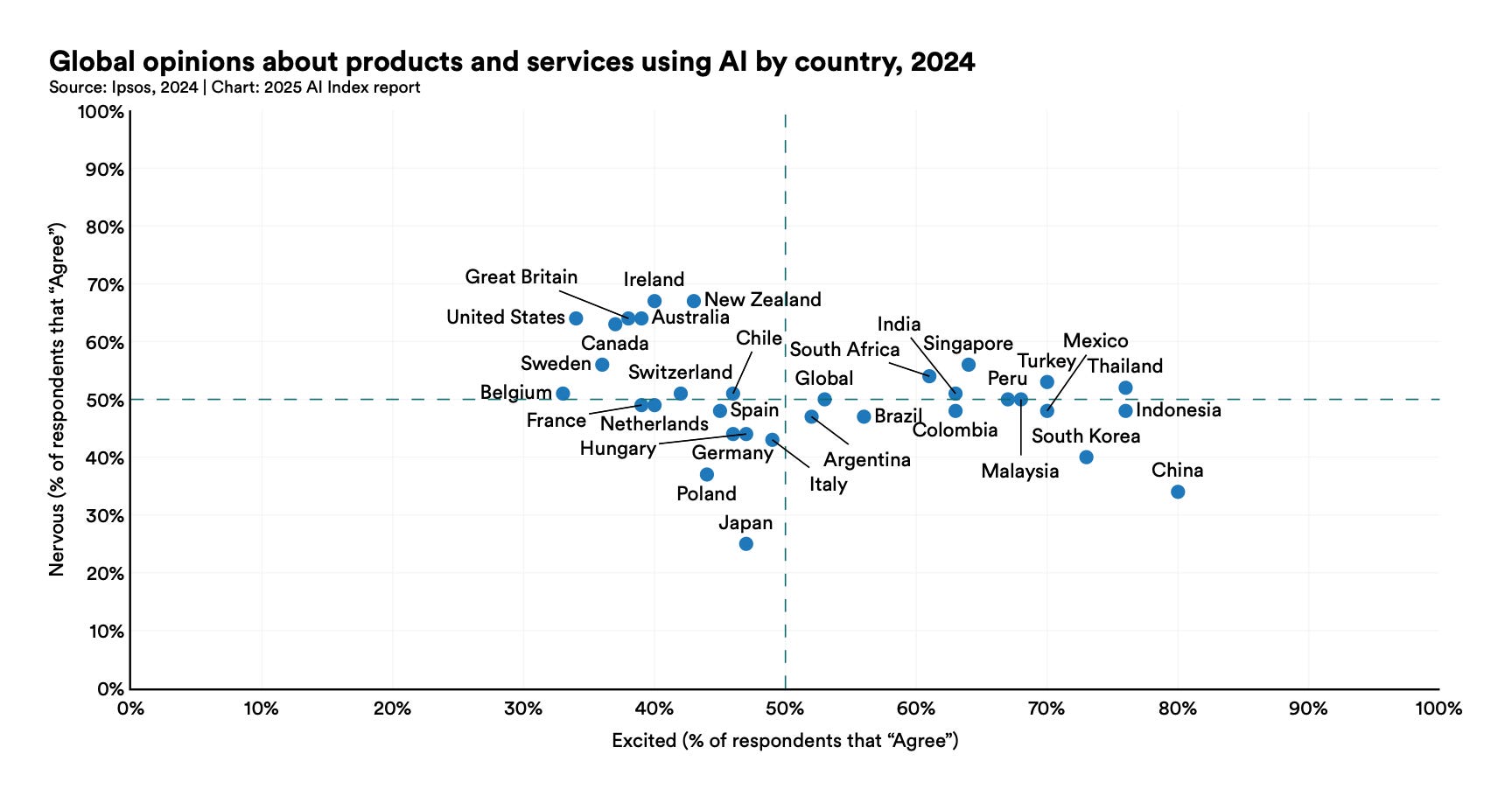
Singapore shows what America could be if we never stopped being American.
Quality flows downwards. Responsiveness to people with higher standards elevates societal standards as a whole. Empirically, people who pay more have higher expectations for what they pay for. So, more responsiveness to the wealthy produces greater quality overall. In healthy societies, their standards improve standards for all classes, which increases the standard for the wealthy, ad infinitum.
For Singapore to work, the wealthy must set standards, everyone else must largely accept those standards, and those standards must improve quality of life for all classes. Around the world, we see three different failure modes. These failure modes are often mixed, but the three sins peak in Europe, Red America, and Blue America respectively. In Europe, the wealthy impose suicidal standards that have make everyone poorer. In Red America, nobody listens to standards and we get the retard internet. In Blue America, elites don’t set any social standards,4 resulting in crime and social degradation.
When resentment blocks the flow of quality, civilizational standards fall instead of rise. Elites fail to set standards, or set wrong standards, and the people don’t listen. The right civilizational standards require a trusting public and an elite that has earned that trust. Now, morons blame AI, social media, and the internet for “enshittification”, when they are God’s mirror to the people.
Egalitarian ideals have no option but to degrade quality. Wherever civilizational improvement exists, it disproves idealistic assertions about the equality of man.
Civilizational improvement demands more than mere empiricism. It is not enough to simply acknowledge that there are people with higher IQ, grip strength, or propensity to crime. To improve, there must be better and worse. If you eliminate the moral responsibility to elevate better things and reduce worse things, your society degrades. A civilization ought to morally discriminate.
The “enshittification” story is a scapegoat story. Technology, the primary attempt for civilization to reassert itself, is blamed for the loss of civilization decades ago. It is not technologists who shit on San Francisco streets. Taste and discrimination are synonyms.
And who is casting the blame? Precisely the politicians whose policies are directly responsible for that enshittification. The most powerful egalitarian argument is conflating the camera and the crime. Real-life egalitarians blame cops for noticing crime,5 taxpayers for noticing tax rates, and lenders for noticing unreliable borrowers. When moral equality is the goal, free exchange of information always becomes an enemy.
Now, egalitarians are getting ready to make technology their greatest scapegoat, because technology is making free exchange of information inevitable.
You could call this the New England Journal of Medicine approach to travel reviews
Though peak food quality still lags behind Shanghai and Tokyo.
or worse, prosecute innocents while releasing criminals
Hilariously, now including body camera footage
Always enjoy your travel reflections. Lee Kuan Yew is a legend. America and Europe can never have a statesman like him because he would be considered a far right bigot. Government jobs are filled by the worst of us, not the best. This is why we can’t have nice things.
Some societies prioritize safety, efficiency, and pleasantness versus edgy.