

In Shenzhen, people walk like they have somewhere to go. They believe they are main characters moving the plot forward. From founders and engineers to waiters, bellhops, and street sweepers, everyone works with intention.
According to some nostalgic visions of America1, they are even more American than us.
Shenzhen is raw. People walk around with oil and paint stains. They smoke, drink, and drive wildly. Once, I saw a guy on a motorcycle doing all three at the same time.
That’s not to say Shenzhen is dirty. Maybe someone from Beijing or Shanghai might. But it’s much cleaner than most American cities.
The odd thing is, Shenzhen is half built.
The best critique of AI art I’ve seen comes from a now-deleted tweet. My paraphrase:
When a human artist draws, you can tell what they care about by the level of detail. Some places are barely sketches, while others draw your eye with their fine detail. With AI, that effort is spread equally, leaving no sense of priority or purpose.
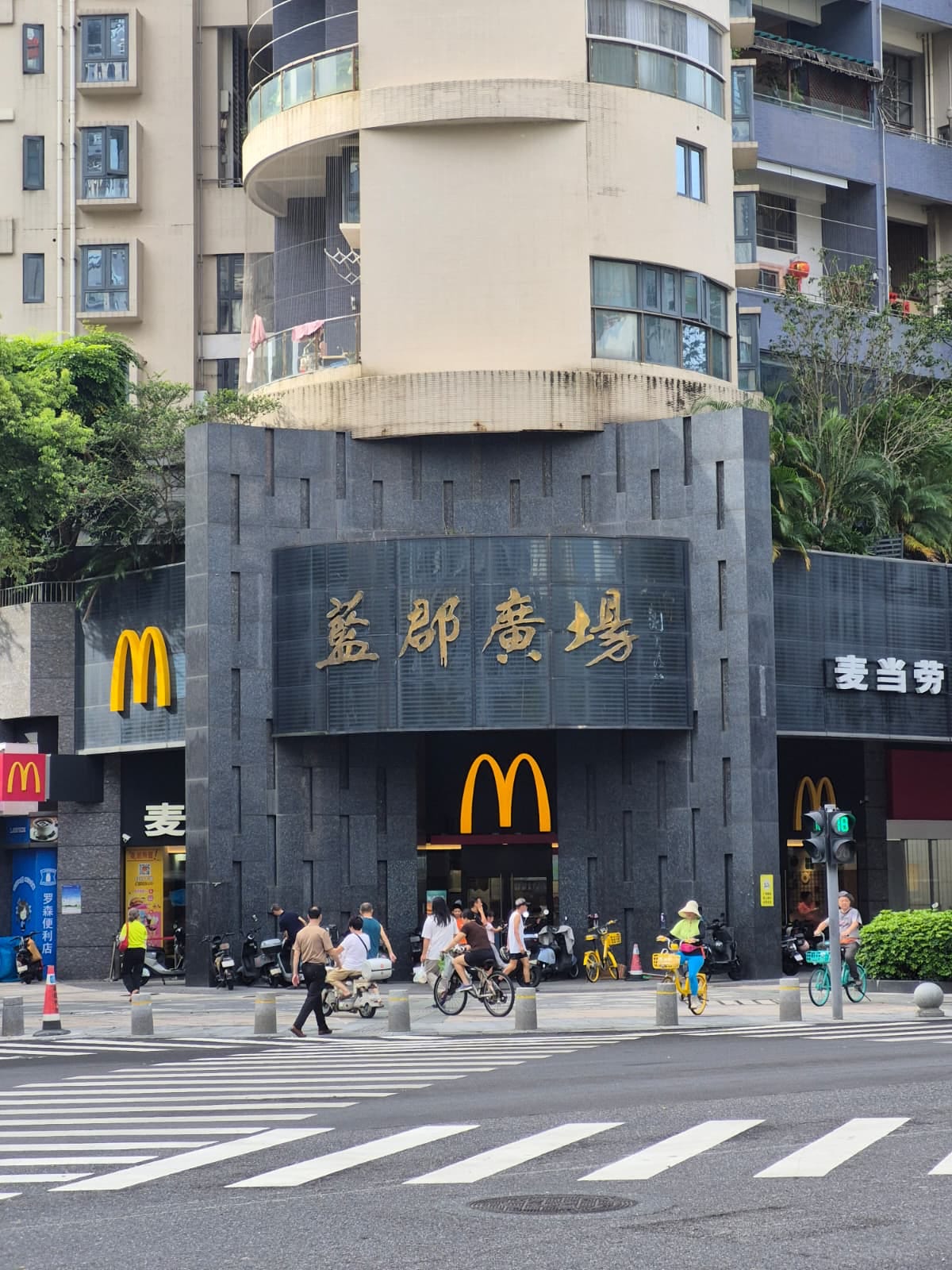
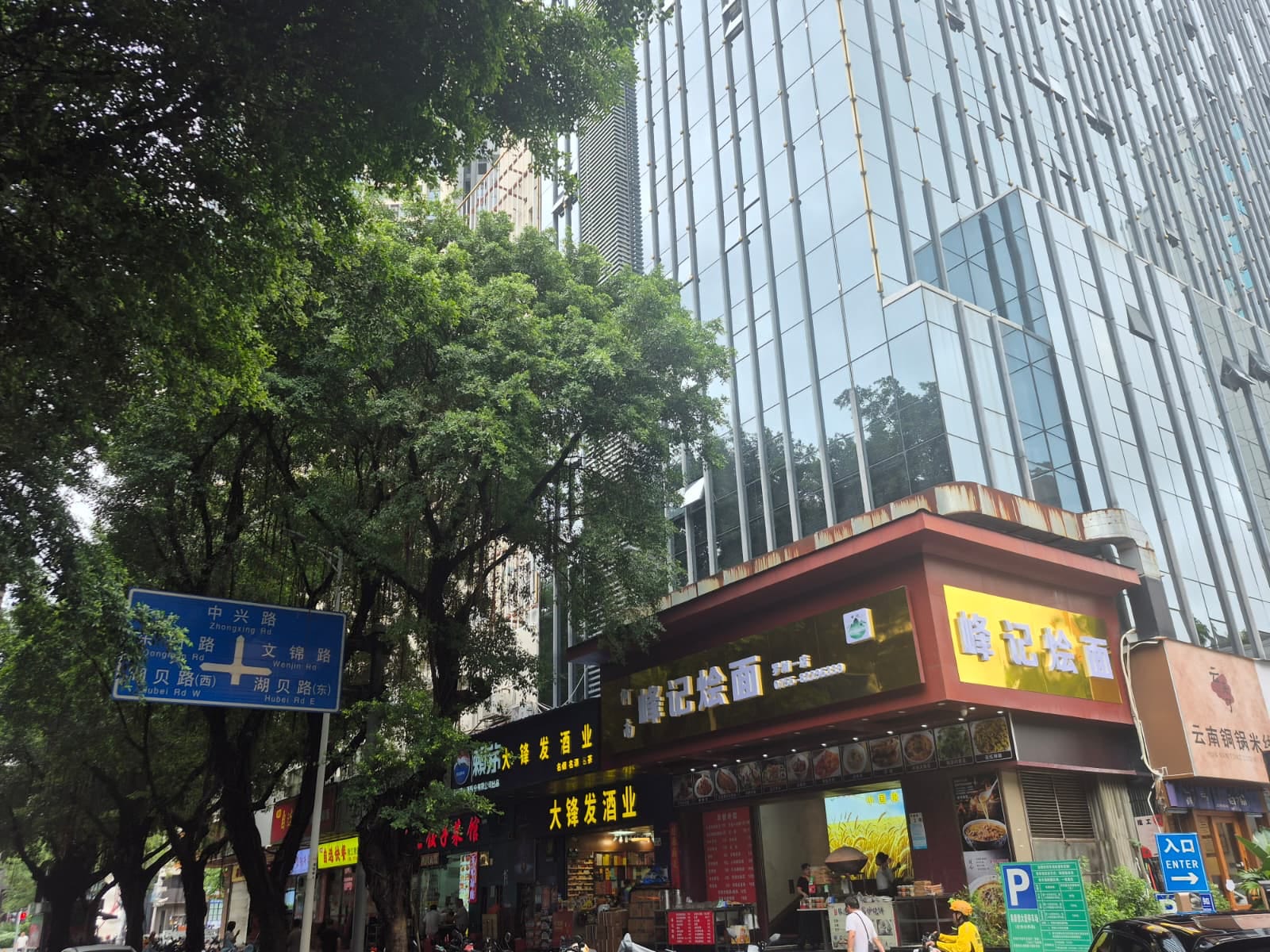
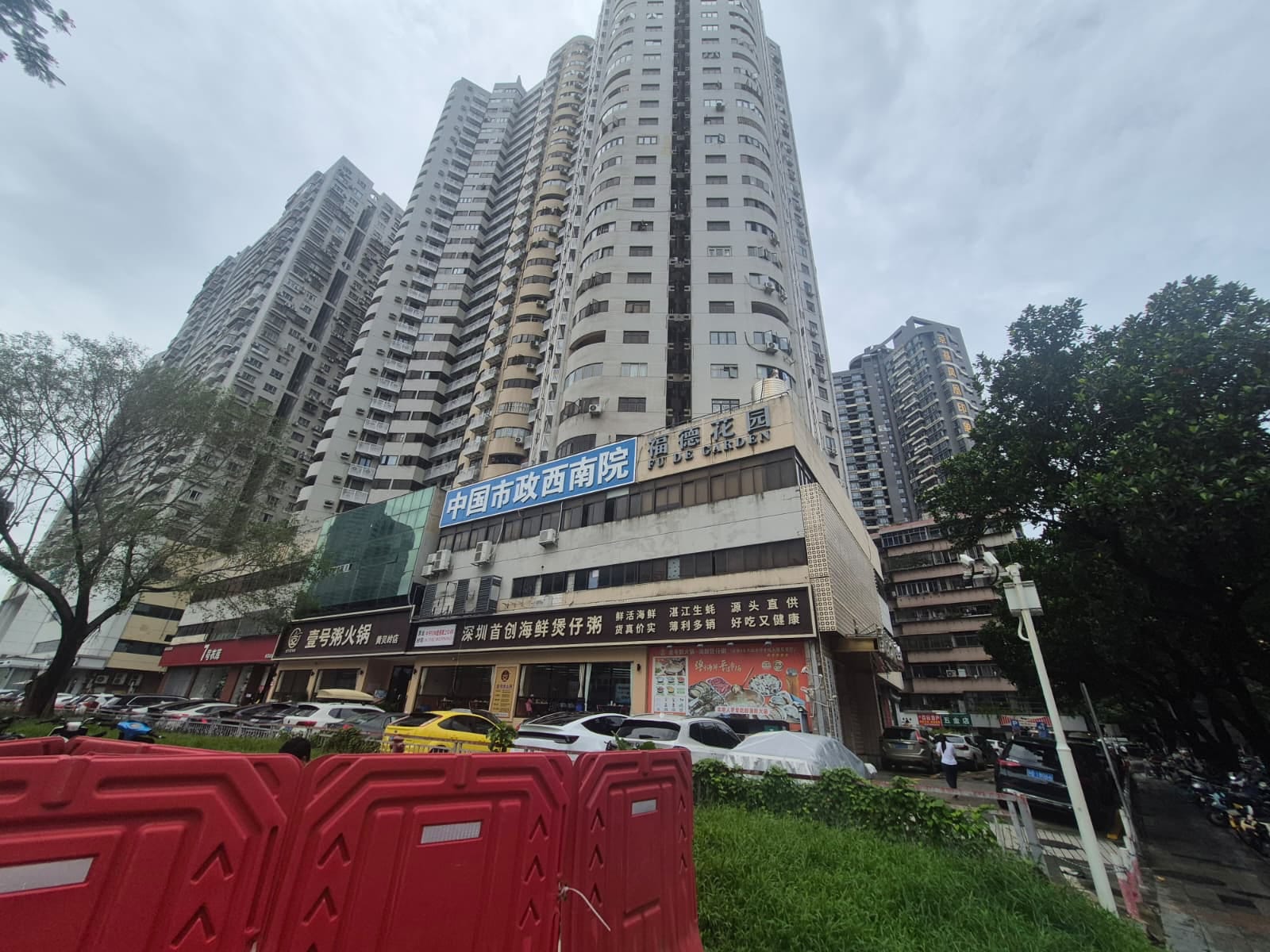
Shenzhen is built like human art. Certain storefronts and offices are dressed to the nines in the decor of the global elite. But walk steps from the main street and not even the entire building has that wealthy downtown finish.2
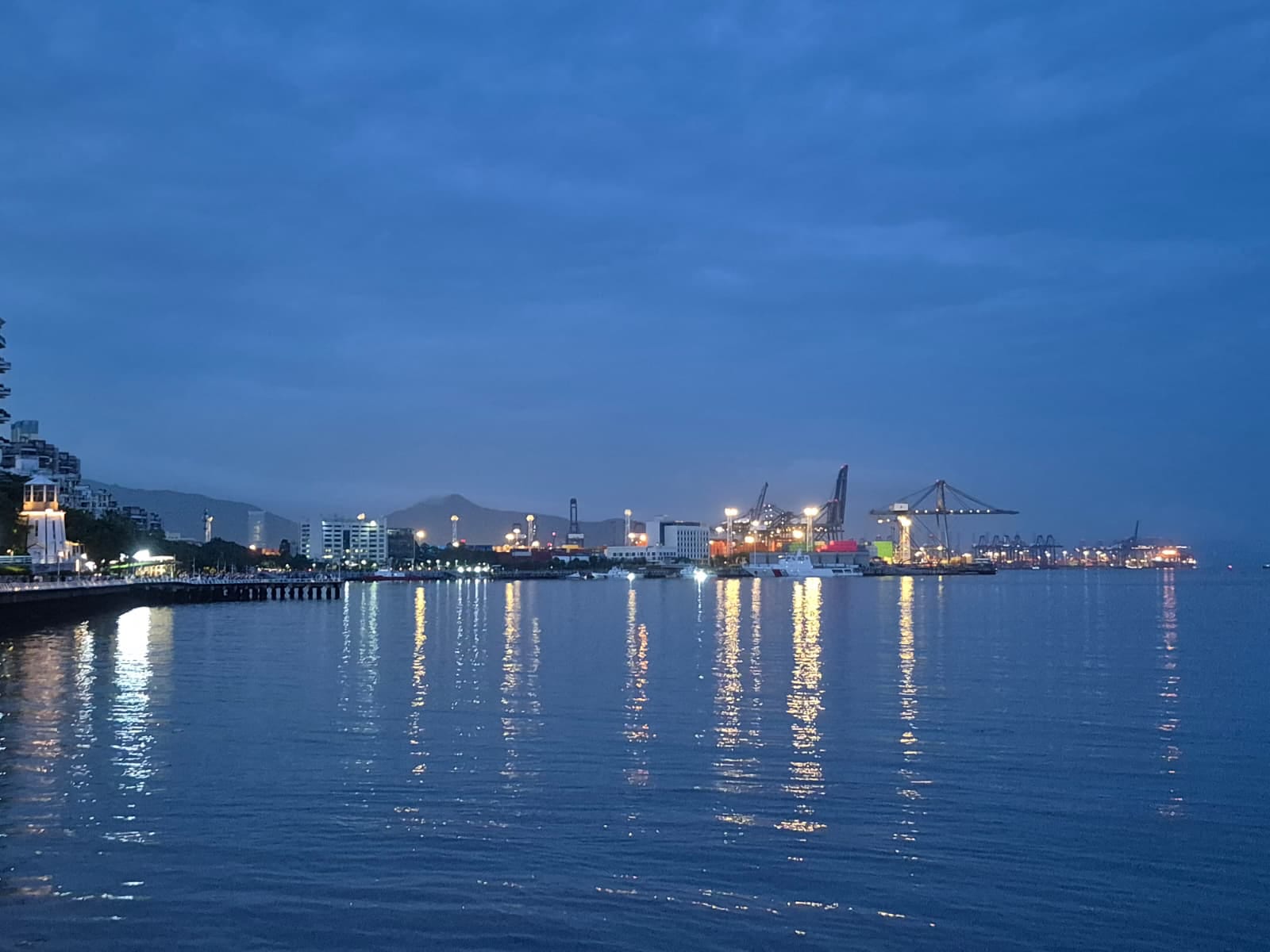
As I settled into Shenzhen, I grew fond of the flash rains. Out of the blue, the coastal rain sets upon us, sheets of water slam into my window. The drops form a pleasant rhythm to life, wiping out the past with a sudden, glorious drumbeat. Perfect for writing.
Sudden, fickle rain has been a theme in East Asian literature since time immemorial. I appreciated this theme in Inio Asano’s A Girl By The Shore more. The book is about the aleatory drama of sexual coming of age, the curses and inversions of nature that come amidst insecurity, desire, and misplaced empathy. Its brief, flirting shift in nature contrasts well with the long, disfiguring rain in British classics like Macbeth.

Lots of people tell me South China is their favorite region for food. I’ve always found it mid by Chinese standards. Maybe it’s because my family made a lot of South Chinese food growing up.3 I always find the meat too sweet, exclusive local pastries too saucy and the soups not achieving anything in particular.
That being said, it is actually an original combination of flavors. Every province puffs themselves up as having a unique cuisine, but most don’t. They blend into each other despite insisting that a slightly different cut of meat cooked slightly longer with a slightly saltier sauce makes their food a special snowflake. Though it seems like I’m insulting them, I’m a huge fan of this regional narcissism.
It’s one of many ways China is the second most American country in the world.
Since my podcast with Noah Smith, where he made this point while reading XI’s CCP national congress speech in a Texan accent, I haven’t been able to get this idea out of my head. Chinese engineers and machine learning researchers wondering about going to America have asked me “will there be same day delivery?”, “will there be rideshare apps?”, “will there be digital payments?” Like America, China is an empire of B2B SaaS.
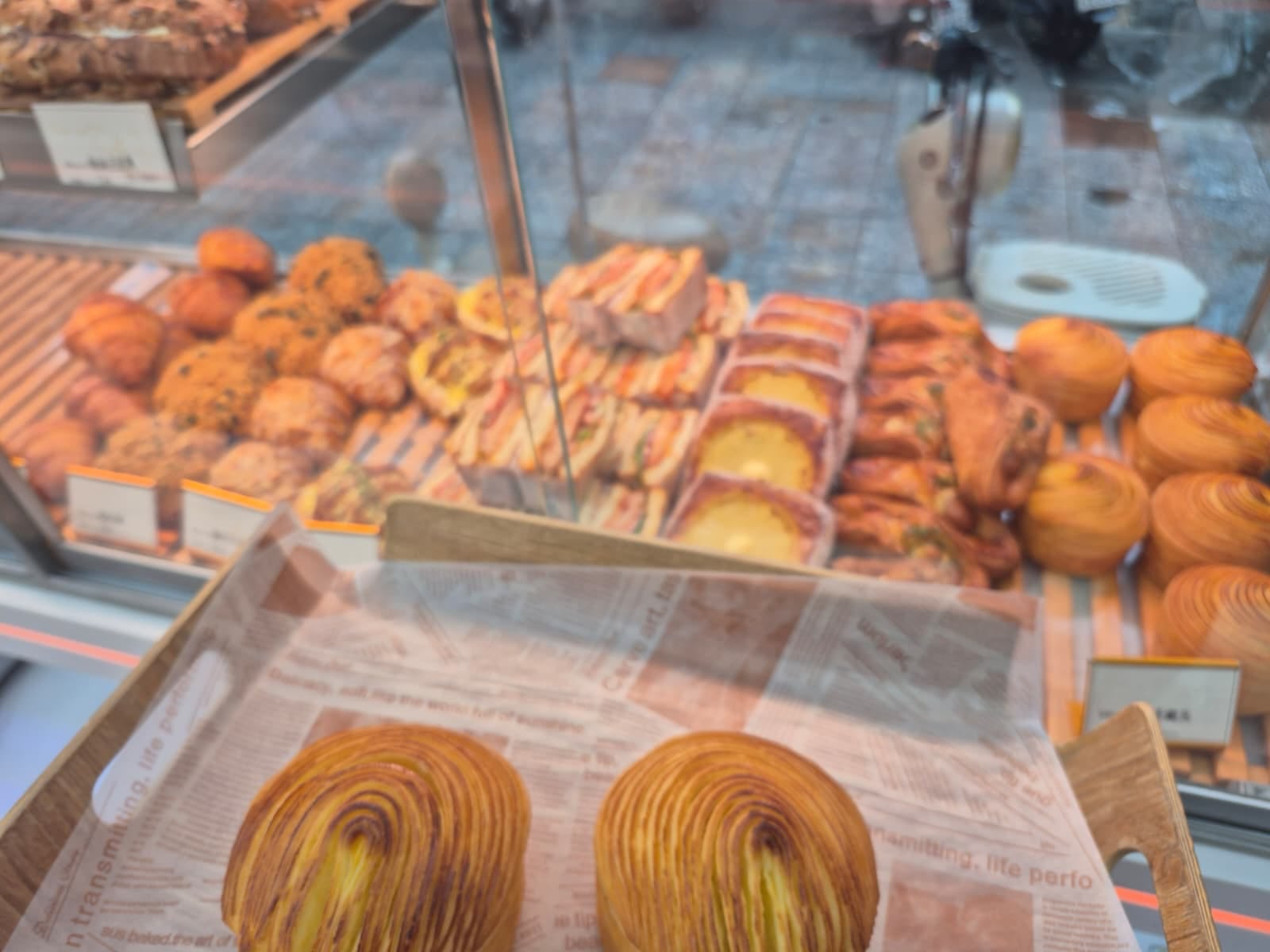
My favorite food in South China is the plain croissant. In terms of pure bread quality, nowhere in the world is as good as South China. Only Taiwan, Japan and other Chinese cities are close. If you’ve never tried East Asian bread, this is a core culinary experience that you’re missing out on. “How can a plain croissant be that different?” It just is.
In fact, East Asia is so much better than the West of the world at baking bread that the standard explanations (IQ, conscientousness, low propensity to crime) don’t suffice. So, I’ve come to the consumer electronics theory of baking. Baking and consumer electronics requires the exact same skills: extreme quality control, environment consistency, sanitation, and precise adjustment of inputs, whose pinnacle sits in East Asia.
In that vein, chain bakeries tend to be the best. Gone are the days of the folk artisanal bakery (if that was ever true to begin with). Now is the era of industrial perfection, of one million rounds of iteration and optimization. Now is the era of TSMC, and also A1 bakery.
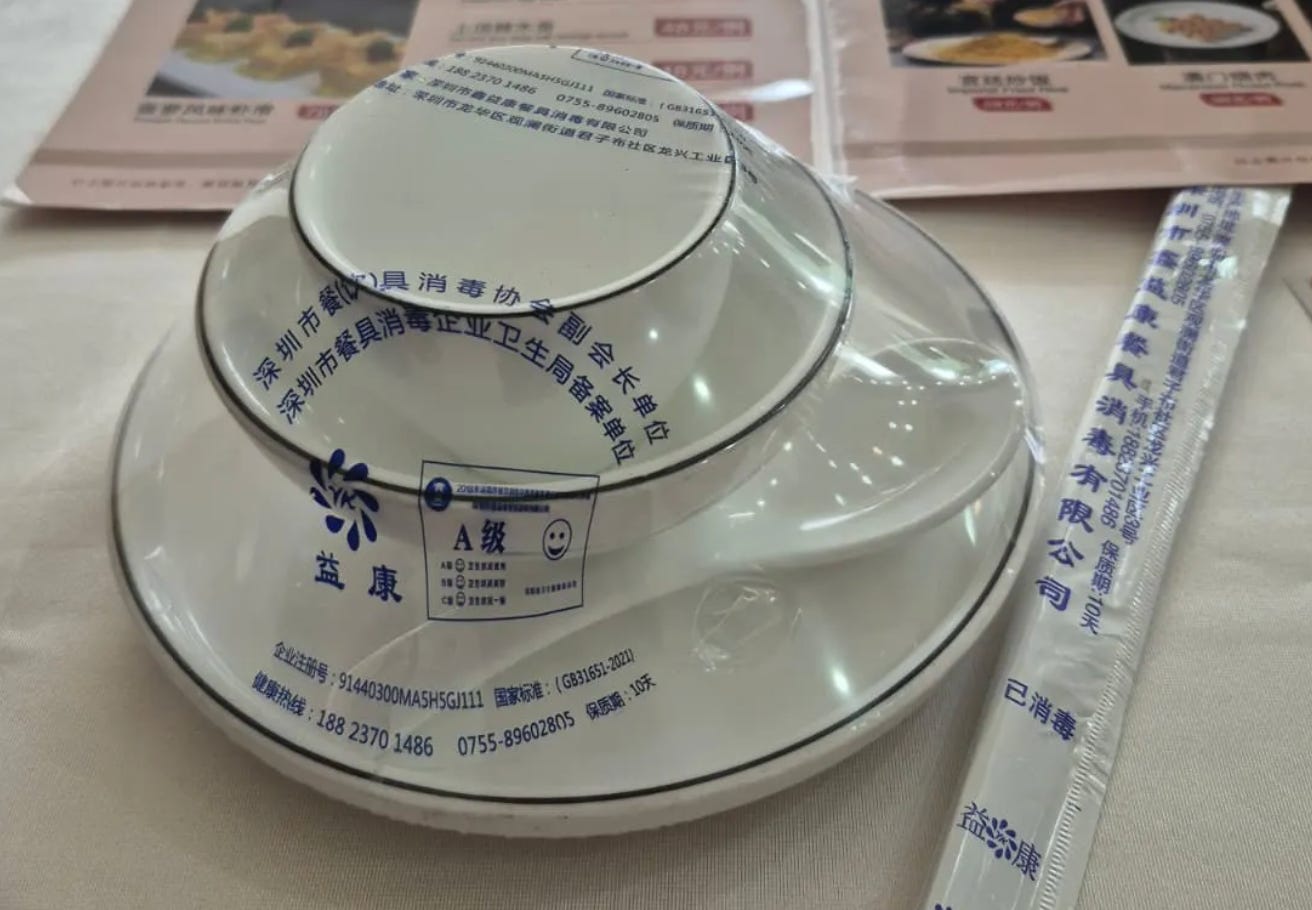
Dining in South China reminds me of the many ways Chinese people are still superstitious. It’s a South Chinese superstition to rinse cups and bowls with tea before eating. It appears that no amount of cleaning or transparency will subdue this superstition. Even when restaurants have transparent kitchens and re-package all cleaned cutlery, people will still do this. It is undefeatable.
I’ve gotten to know many people who love the term “solarpunk”. Most Chinese cities fit the term perfectly: high-tech plus nature.
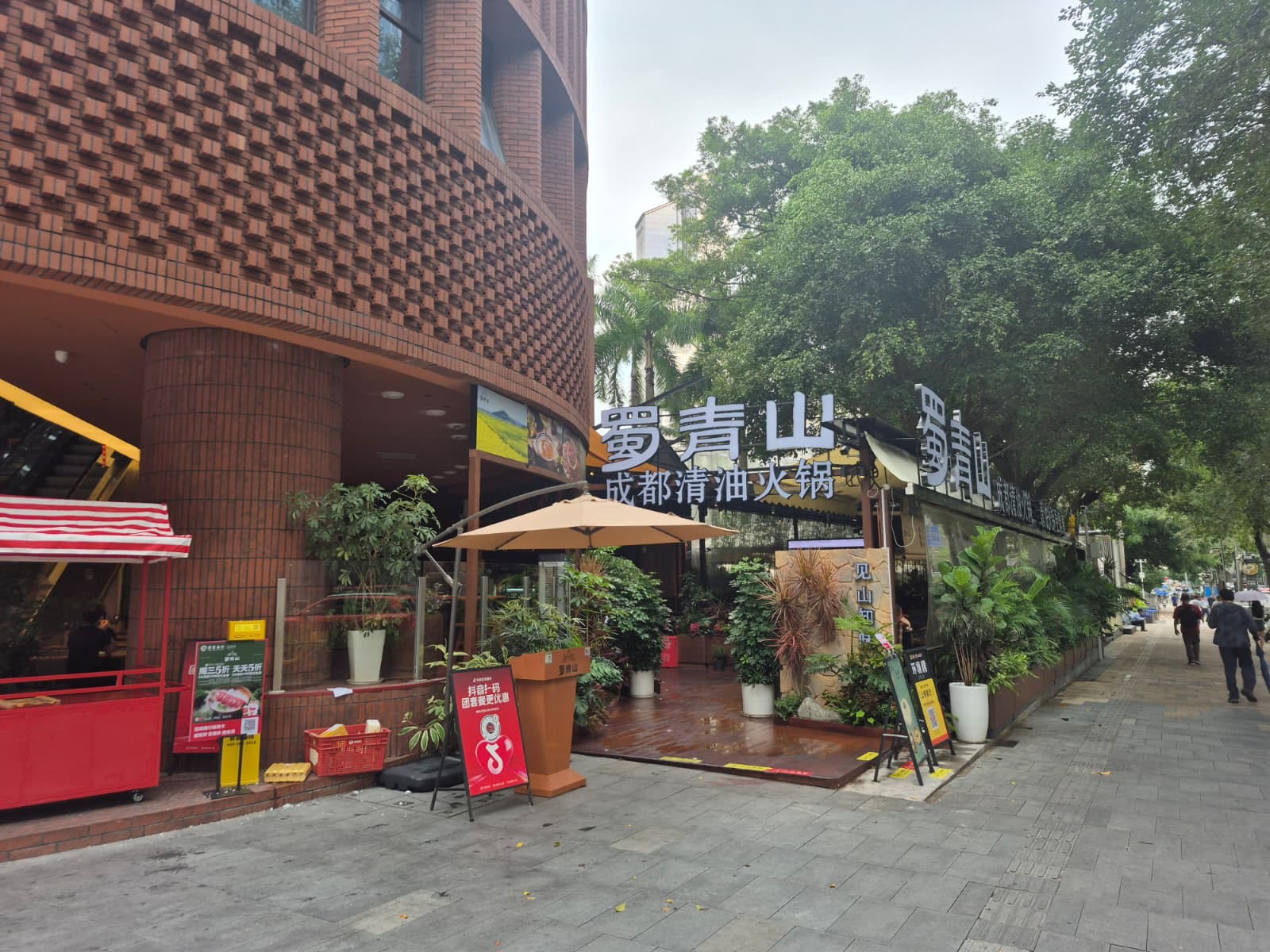
It raises the question: “why is this considered a unique aesthetic at all?” Most civilizations fill their advanced settlements with Greenery. Victorian estates? Greenery. Middle age castles? Greenery. Pagodas? Roman temples? Indian palaces? All the mechanical marvels of their day and all filled with Greenery.
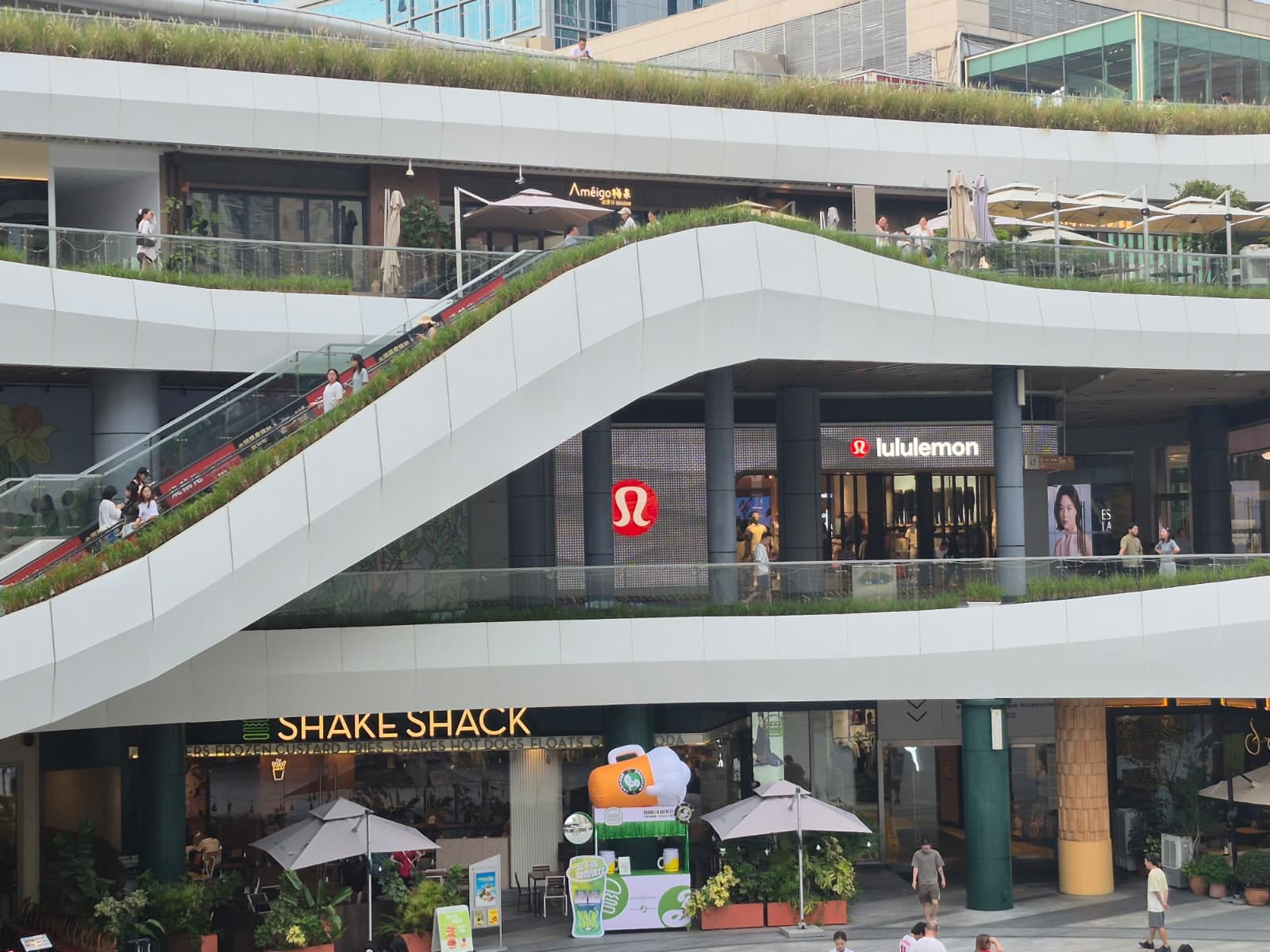
So solarpunk, separate from “obvious decoration” is a modern creation. The answer is Western zoning and health laws. That’s only scratching the surface of the insanity that is single-use zoning.
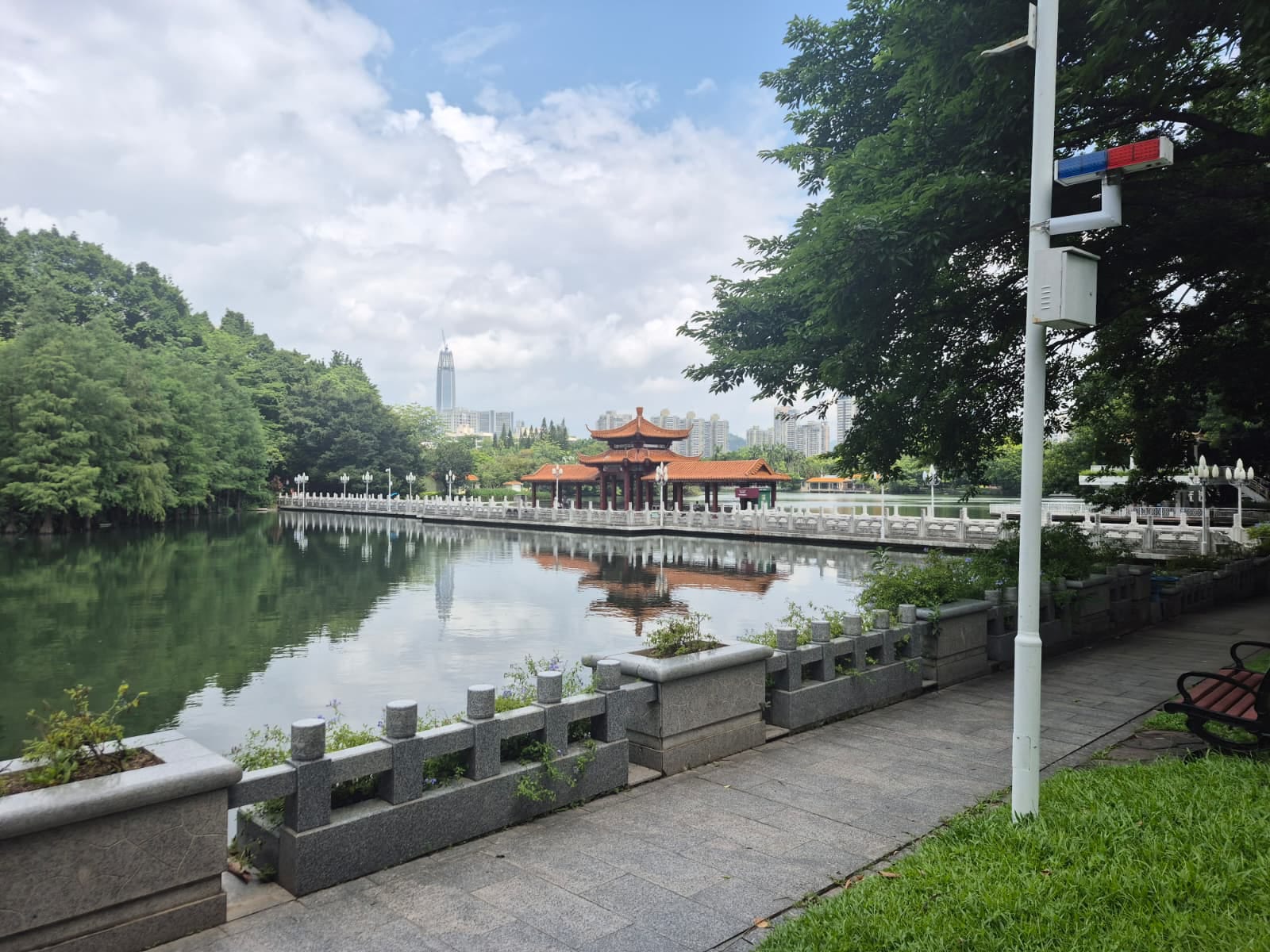
Most Chinese cities, including Shenzhen, have fairly large parks spread across their city centers. You would think these get crowded quickly, but they’re almost completely empty during the day. Not many people taking calls or business meetings in parks, which is what I would do if I worked in a Shenzhen office.
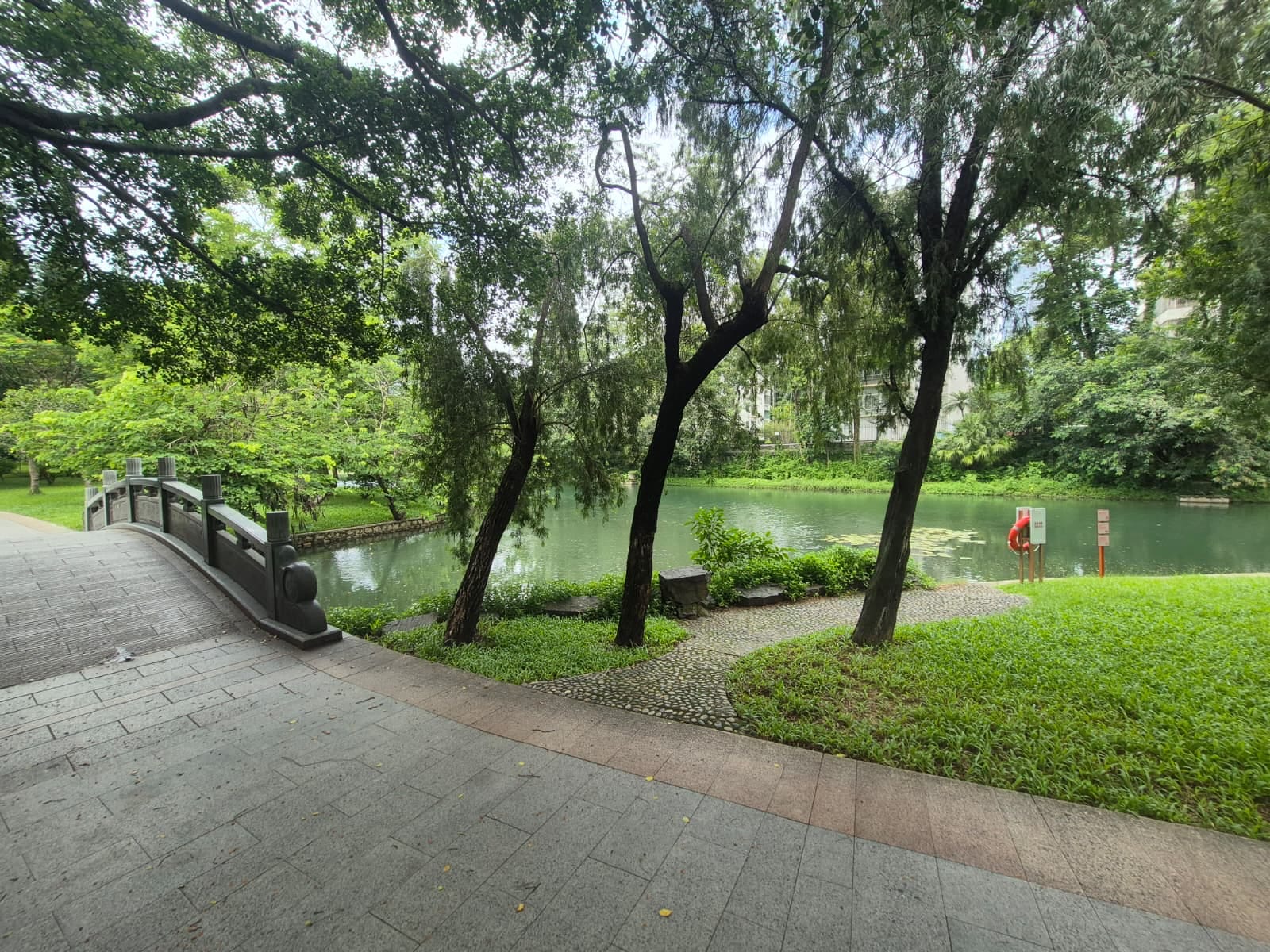
China is what actual left-wing Abundance looks like. You can just build public spaces until supply outstrips demand. You can just arrest all the criminals who degrade public spaces. Scale is all you need.
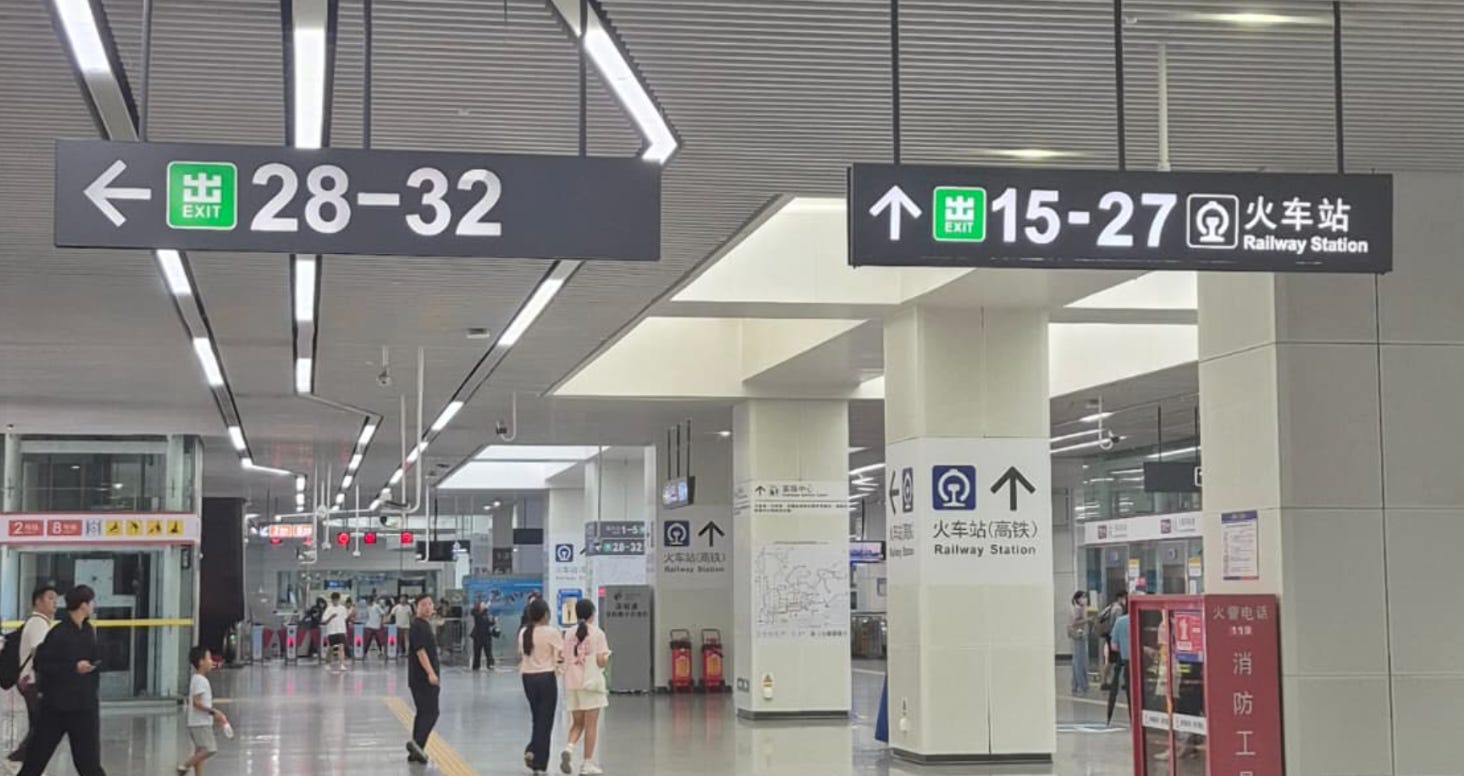
Most ways Chinese ‘technocracy’ beats the America doesn’t require a high IQ to understand. There are just a certain number of ridiculous, evil ideas that gained traction in American cities, like single-use zoning and criminal rights. Most people with a room temperature IQ know that it’s wrong, but our civic mythologies prevent them from admitting that out loud.
This has led to the creation of another new term that in hindsight is completely insane, which is “mixed-use zoning”. Pretty much every city in China has malls or shops immediately below massive buildings full of offices, apartments, or both. We made this illegal because the American urban planning tradition is retarded.
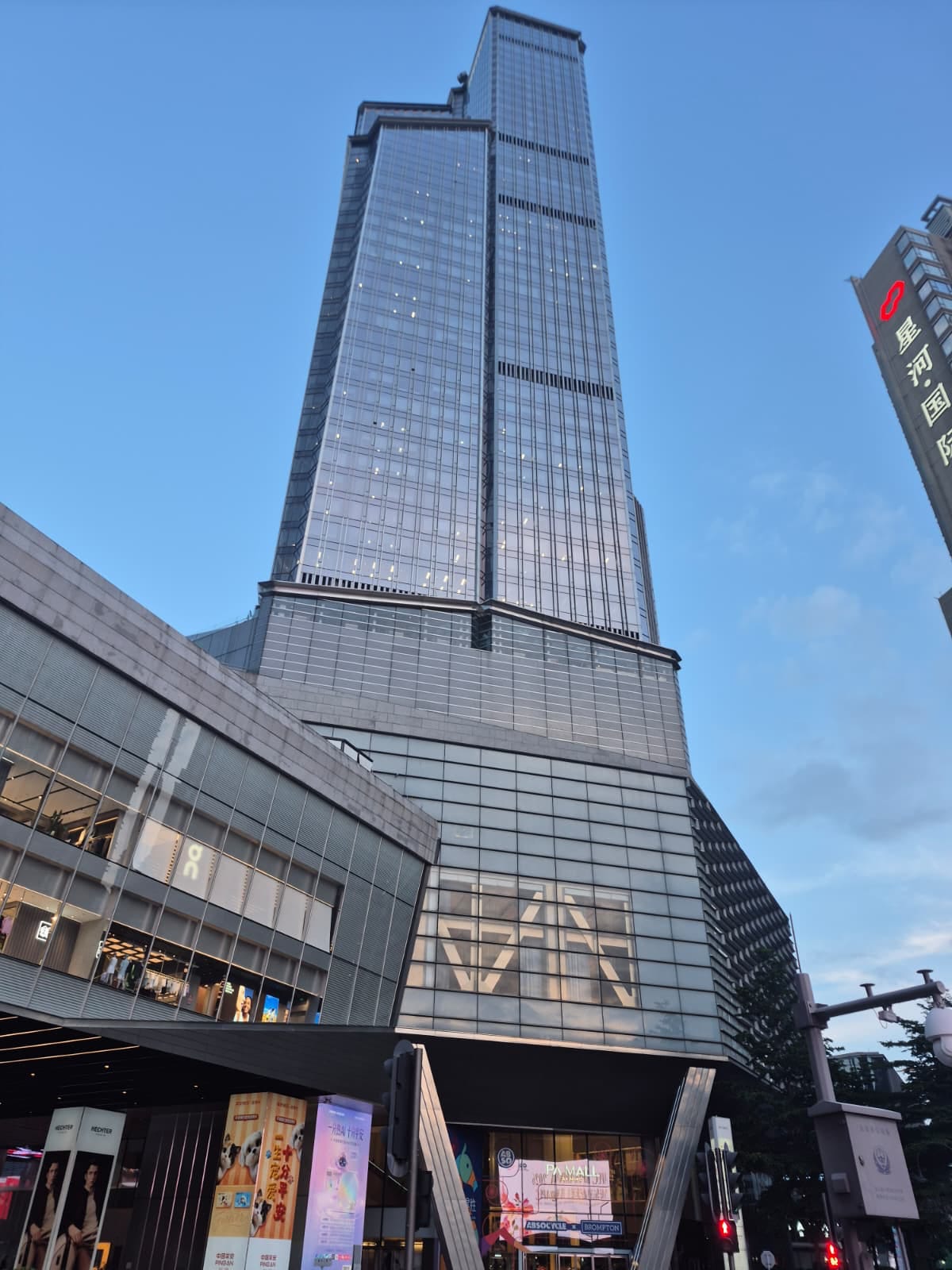
There is no legitimate argument for single-use zoning in 2026; it is an idea that is vaporized on contact with any Chinese city, which is vastly more functional than their American counterparts despite having orders of magnitude more people. Anyone who doesn’t admit this idea has long been vaporized is stupid or ideological beyond repair.
It’s one way the normal Chinese person has more freedom with their property than a normal American. I’ve often said that America can only lose to China if China becomes the morally better country, which is assumed to mean blind faith in America. But there are already parts of the economy in which China is much more moral than America. And it is no surprise that America is losing those industries.
I doubt it’s the most likely turn of events, but it wouldn’t completely surprise me if America loses to China on AI. We would only have ourselves to blame.
Here is one example: the 100% Chinese EV tariffs signaled that the die is cast. America has given up on winning. We will produce an inferior product and beg our allies to buy them. Most of our allies will refuse4, and those who don’t will only make their citizens poorer.
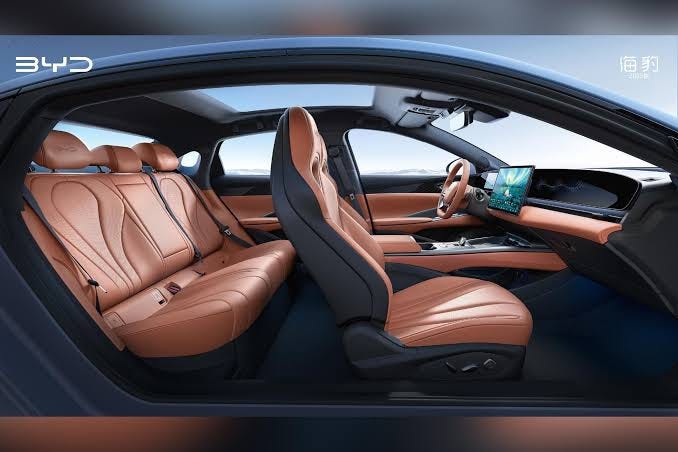
I travelled on a fair number of BYDs during my trip. They are considerably more comfortable than Teslas. They’re perfect to sleep in. Most Americans don’t truly understand how cooked we are when it comes to EVs. We’re losing not only on price, but design, reliability, and technology. In a few years, we’ve fallen far behind.
I like Shenzhen. Its flaws are works in progress, not remnants of a greater past. Shenzhen could be the most American city in China. We have some things to learn if we want to make America great again.
Which I don’t agree with
That’s not true of all corners or buildings. The financial district looks identical to any city’s financial district. But it happens often enough that it’s a noticeable trend.
My parents and grandparents are from Hong Kong.
a. https://financialpost.com/commodities/energy/electric-vehicles/china-evs-canada-what-consumers-should-know b. https://www.businesstimes.com.sg/companies-markets/transport-logistics/one-three-plug-hybrid-cars-sold-europe-now-chinese
I have family in Shenzhen and have been there many times, agree with you that it is the most "American" part of china. Everyone there is hustling and there are far fewer nosy anties to deal with. Hard disagreement on the bakeries front. What they have in Schenzhen (and much of Asia) is patisseries. The bread there is much too soft and tasteless. Fresh Mantou can be extremely delicious if done fresh but youll need to go outside of south china to get it done properly. For food Schenzhen is second tier as the locals are too busy making money to really focus on food. Like san Fransisco the industries in Schenzhen are not complementary to highest quality food. For the best south china food head north-west to Guangzhou, south to HK, or northeast to huizhou.
The wild thing is that China actually has had, since the early 1980s, a design that in some of the most key areas more closely resembles old America’s system than contemporary America does.
China today resembles the pre-Neoliberal Era, but especially pre-WW2 USA in important structural ways. And that is that old America was and current day China is a system with highly decentralized economic, governmental, scientific, and financial structures. In both systems, most all real decision-making occurred locally and regionally, provincial and municipal developmental competition in China; state, municipal, civic, and regionally based industrial systems in old USA.
A thing I get a kick out of is that in the latter 1970s and early 1980s, some CPC local party branches actually referenced the reforms of the mi 19th century American Jacksonians to argue for the reforms that ended up being enacted, and the Chinese system has in key ways looked remarkably like the system of America from the 1830s until well after ww2, for examples, the Guangzhou Municipal Party School in the late 1970s, there are reports from interviews with later reform officials (such as in Deng era memoirs) that Guangzhou’s reformist intellectual circles made reference to designs established during the period of Jacksonian Democracy such as infrastructure financing models, local tax share-dominance and retention, the benefits of city-led economic experimentation, etc. And the Shanghai Economic Research Institutes in the early 1980s compared 19th century Americas city-state relationships to their desired trajectory for Chinese coastal cities, which were strong port cities with fiscal and legal tools to manage foreign trade, investment, and currency operations.